For years, retired government employees in Pakistan faced a daunting biannual ritual. To keep their well-earned pensions flowing, they had to physically visit a bank or a gazetted officer to prove they were still alive. This process often involved long queues, confusing paperwork, and physical strain that many elderly citizens struggled to manage.
Recognizing these challenges, the National Database and Registration Authority (NADRA), in collaboration with pension disbursing agencies, introduced a streamlined solution. The NADRA Life Certificate system leverages biometric technology to simplify proof of life verification. This initiative aims to dignify the process for senior citizens, ensuring they receive their dues without unnecessary hassle.
If you or an elderly family member relies on a pension, understanding this new system is vital. This guide covers everything you need to know about the NADRA Life Certificate, from the required documents to the step-by-step verification process.
What Is a Life Certificate and Why Is It Mandatory?
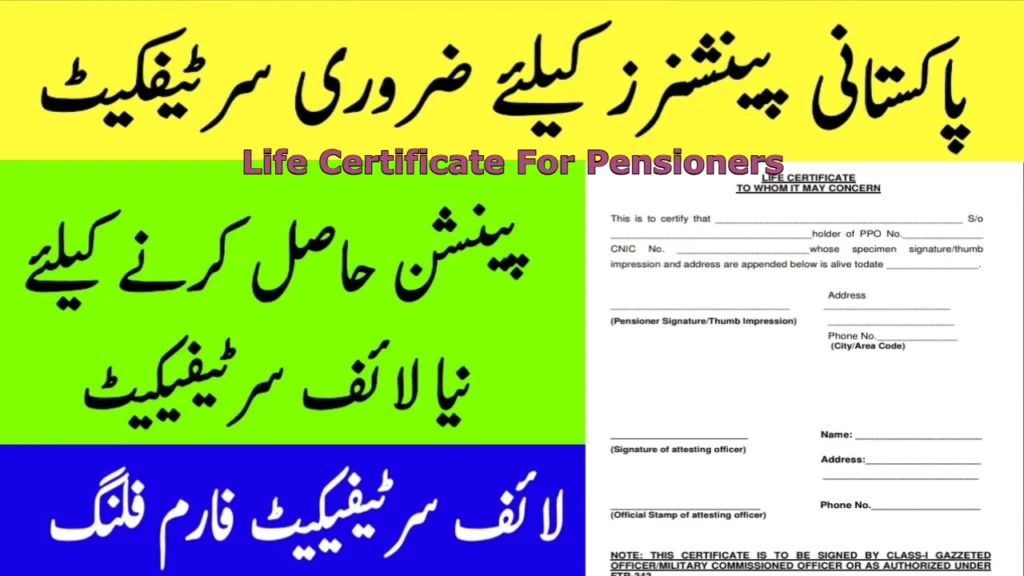
A Life Certificate is essentially a “proof of life” document. Government and semi-government institutions require this verification to ensure that pension payments are going to legitimate, living beneficiaries. Without this check, the system would be vulnerable to fraud, such as “ghost pensioners” continuing to draw funds long after a retiree has passed away.
Traditionally, pensioners had to submit this certificate twice a year—usually in March and September. Failure to do so would result in the immediate suspension of monthly payments, causing financial distress for those who rely solely on this income.
The NADRA-based system digitizes this requirement. Instead of signing papers in front of a bank manager, pensioners can now use biometric verification. This digital footprint instantly updates the records of the pension disbursing bank or post office, confirming that the account holder is alive and eligible for payment.
The Shift to Biometric Verification
The move toward a centralized, biometric system addresses two major issues: convenience for the pensioner and transparency for the state.
Under the old manual system, files could go missing, and signatures could be forged. The biometric system links directly with the national database. When a pensioner places their thumb on the scanner, the system verifies their identity against their Computerized National Identity Card (CNIC) records. This real-time verification drastically reduces errors and eliminates the need for paper files to move between offices.
How to Obtain the NADRA Life Certificate
Getting your verification done is now more straightforward, but it requires following a specific procedure. Here is how you can complete the process.
1. Locate a Facilitation Center
You generally have two main options for biometric verification. You can visit any NADRA Registration Center (NRC) across Pakistan. Alternatively, many designated branches of the National Bank of Pakistan (NBP) and other partner banks are now equipped with NADRA biometric devices specifically for this purpose.
2. Gather Required Documents
Before leaving home, ensure you have the necessary documentation to avoid multiple trips. You will need:
- Original CNIC: Your Smart Card or standard CNIC is mandatory.
- Pension Book/PPO Number: The Pension Payment Order (PPO) number helps link the verification to your specific pension account.
- Bank Account Details: Information regarding the bank branch where your pension is credited.
3. The Biometric Process
Once you arrive at the center or designated bank branch, you will approach the counter handling pension verification. The officer will ask for your CNIC and enter your details into the system. You will then be asked to place your thumb or fingers on the biometric scanner.
Upon a successful match, the system generates a digital receipt or updates the central server immediately. In many cases, you do not need to submit a physical paper to your bank if the systems are integrated; the digital confirmation serves as your Life Certificate.
Dealing with Biometric Failures
A common concern for senior citizens is the fading of fingerprints. With age, skin loses elasticity and ridges can wear down, making biometric scanning difficult. This creates anxiety for pensioners who fear their verification will be rejected.
NADRA has protocols in place for these situations. If a fingerprint match fails repeatedly, the officer may try different fingers. If biometric verification is completely impossible due to skin conditions or age factors, the system usually reverts to a secondary verification method. This might involve a manual override authorized by a senior officer, or you may be allowed to submit a traditional medical certificate signed by a gazetted officer, though the goal is to minimize these manual exceptions.
Renewal Frequency and Validity
It is crucial to keep track of your renewal dates. While the digital system is faster, the requirement for periodic verification remains. Most departments still require this proof of existence every six months.
However, policies are evolving. Some institutions are moving toward an annual verification model for those using the biometric system. Always check the specific validity period printed on your receipt or ask the bank officer when your next verification is due. Missing this date triggers an automatic freeze on your account, which can take weeks to rectify.
Frequently Asked Questions
Is there a fee for the NADRA Life Certificate?
Generally, biometric verification for pension purposes at banks is a service provided free of charge or for a nominal fee, depending on the specific bank’s policy and your account type. NADRA centers may charge a small processing fee for issuing specific certificates, so it is wise to carry a small amount of cash just in case.
Can I do this verification from home?
NADRA has been rolling out mobile applications like the “Pak Identity” app, which allows for biometric verification via a smartphone camera. While this technology is advancing, its application specifically for pension renewal depends on whether your specific pension disbursing agency accepts app-based verification. It is best to call your bank’s helpline to confirm if remote verification is active for your account type.
What happens if I am bedridden and cannot visit a center?
For pensioners who are too ill or frail to travel, family members should contact the nearest branch of their pension disbursing bank. Many banks have provisions for a “Life Certificate by Visitation,” where a bank officer may visit the residence, or they may accept a certificate signed by a medical superintendent or authorized gazetted officer in lieu of a physical visit.
Does this apply to overseas pensioners?
Pensioners living abroad have a different procedure. They typically need to visit the Pakistan Embassy or Consulate in their country of residence. The embassy verifies the Life Certificate and forwards it to the relevant department in Pakistan. Biometric options are also becoming available at certain consulates.
Securing Your Financial Future
The transition to the NADRA Life Certificate system is a significant step forward in serving Pakistan’s senior citizens. While adapting to new technology can be intimidating, the benefits of instant verification and reduced paperwork are undeniable.
By keeping your CNIC valid and staying aware of your renewal months, you can ensure a smooth continuation of your pension payments. Do not wait until the last week of the deadline; visiting the center early can save you from long wait times and potential system downtimes. Your pension is your right ensure you claim it with the dignity you deserve by staying updated on these procedural changes.